In the language of budgets, revolutions rarely announce themselves. They appear instead as line items — incremental, technical, easily overlooked. Yet taken together, they often signal something far more consequential: a shift in national posture.
The latest signals from the U.S. Air Force suggest precisely such a moment. Beneath the headlines of geopolitical tension and global conflict lies a quieter, more optimistic story — one of renewal, investment, and a deliberate rebuilding of capability.
At its core is a simple idea: readiness matters again.
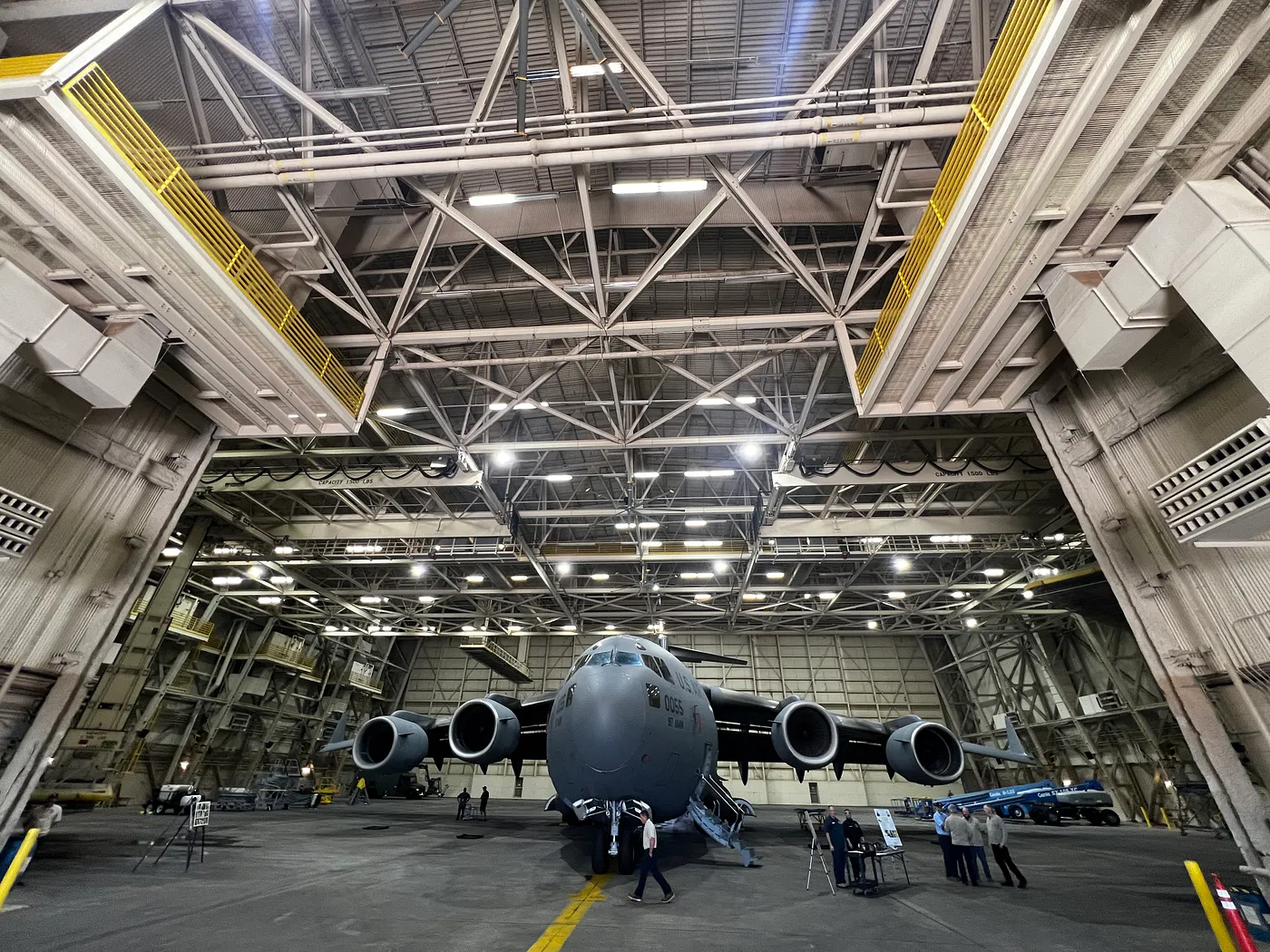
For years, the U.S. military has contended with a paradox familiar to many large systems. It remained the most capable force in the world, yet struggled with the mundane realities of maintenance, supply chains, and aging platforms. Aircraft sat idle not for lack of pilots, but for lack of parts. Maintenance crews improvised, often cannibalising one aircraft to keep another flying. The result was predictable: declining mission-capable rates and growing concern among policymakers.
That cycle now appears to be turning.
The Air Force’s request for an additional $3.2 billion in spare parts funding is not merely a budget increase — it is a recognition that operational effectiveness begins with the basics . Moving sustainment funding from historically under-resourced levels toward 93% of requirements marks a decisive shift in priorities. It is, in effect, an admission that readiness is not an abstract concept, but a supply chain.
Equally significant is the proposed expansion of the Consolidated Sustainment Activity Group (CSAG), with funding rising to $4.2 billion. This is not glamorous spending. It does not produce new aircraft or cutting-edge weapons. Instead, it ensures that existing systems — engines, components, and logistics networks — function as intended. In economic terms, it is a move from capital expansion to productivity optimisation.
And productivity, as economists have long argued, is where real gains are made.

What is emerging is a more resilient model of military capability — one less dependent on constant acquisition and more focused on sustaining and maximising what already exists. This mirrors broader trends in advanced economies, where efficiency gains increasingly outweigh sheer expansion.
There is also a structural dimension to this shift. The growing emphasis on “right-to-repair” legislation reflects a recognition that control over intellectual property can constrain operational flexibility. Allowing Airmen to repair systems at the component level rather than replacing entire units is not just a technical adjustment; it is a rebalancing of power between government and contractor. Done correctly, it could reduce costs, accelerate repairs, and foster a more competitive industrial ecosystem.
Beyond the Air Force, the implications ripple outward.
The broader $1.5 trillion defence request — described as a “seize-the-moment” budget — aims to expand the industrial base itself. The message to industry is clear: scale up, invest, and prepare for sustained demand. In effect, the government is attempting to de-risk long-term investment for manufacturers, encouraging capacity growth that has lagged in recent decades.
This is industrial policy, albeit in a distinctly American form.
Critics will point to the scale of spending, and not without reason. Yet there is a counterargument worth considering. Much of this investment is not about expansion for its own sake, but about addressing accumulated deficits — years of underinvestment in maintenance, supply chains, and production capacity. In that sense, it resembles infrastructure spending: costly upfront, but essential for long-term stability.
Even the geopolitical backdrop, often framed in terms of risk, underscores the importance of this shift. Operations such as the enforcement of maritime blockades and the integration of economic and military tools demonstrate a more sophisticated approach to power — one that relies as much on coordination and logistics as on firepower . These are systems-level challenges, and they require systems-level solutions.

What is striking, then, is not simply the scale of the response, but its character.
Rather than pursuing a purely technological leap, the United States appears to be investing in something more foundational: the ability to sustain, repair, and deploy its existing capabilities effectively. It is, in many ways, a return to first principles.
And therein lies the optimism.
For all the uncertainty of the current global environment, the underlying trend is one of reinforcement. Supply chains are being strengthened. Industrial capacity is being expanded. Maintenance backlogs are being addressed. These are not dramatic developments, but they are consequential ones.
In economics, growth is often measured at the margin — small changes that, over time, compound into something larger. The same may now be true of American defence readiness.
The headlines may focus on conflict. The numbers suggest something else: a system quietly, deliberately, becoming stronger.